22 October 2026
Being Able to Swim Is Not the Same as Being Safe in Water
By Nurul Aisyah, Water Safety Instructor · Last edited 23 October 2026
When parents sign their children up for swimming lessons, one of the first goals is usually quite simple:
"I want my child to learn how to swim."
And of course, learning to swim is important.
But there is another skill that I believe deserves just as much attention:
Learning to be confident and comfortable in the water.
These two things sound similar, but they are not the same.
A child can know how to swim but still panic when they unexpectedly fall into water.
A child can swim several laps but struggle to float calmly when they become tired.
A child can be confident enough to jump into a pool, but not understand when they should not enter the water.
And sometimes, being able to swim can actually make a person feel more confident around water than their actual ability justifies.
That is why swimming ability should be only one part of water safety.
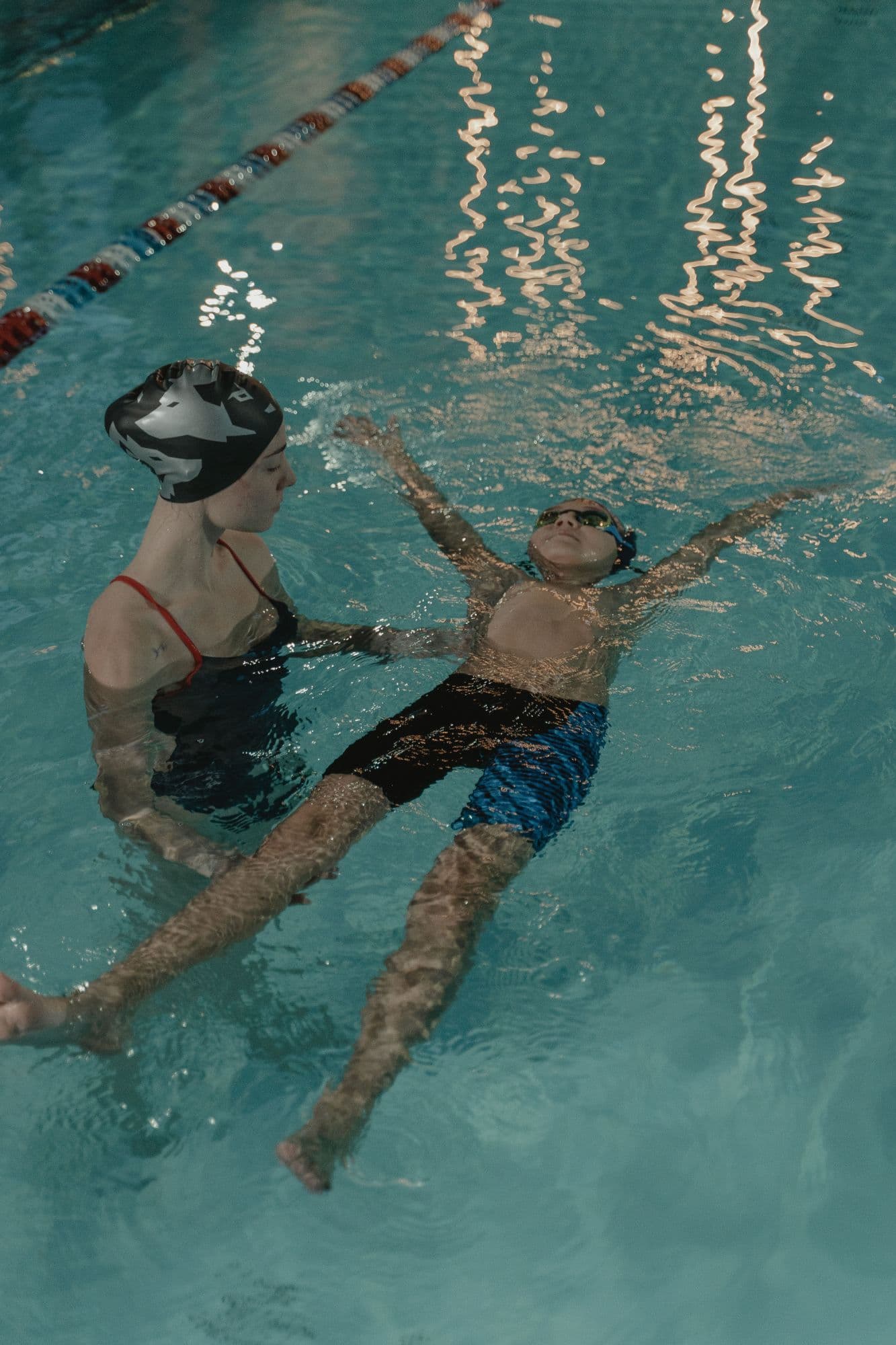
Swimming and water confidence are two different things
When we say someone "can swim", we usually mean they have learnt certain physical skills.
They can kick.
They can move their arms.
They can breathe.
They can move through the water from one point to another.
They may be able to swim freestyle, breaststroke or backstroke.
These are important skills.
But water confidence is about how a person responds to being in the water.
Can they stay calm?
Can they control their breathing?
Can they float or stay up while floating?
Can they recover if they lose their balance?
Can they turn themselves towards safety?
Can they make sensible decisions around water?
Can they respond when something unexpected happens?
These are very different questions.
Why being comfortable in water matters
Imagine two children.
The first child can swim 25 metres confidently during a swimming lesson.
The second child can only swim a short distance, but is comfortable putting their face in the water, floating, turning around and reaching for the pool wall.
Which child is "better" at swimming?
It depends on what we are measuring.
But if the situation suddenly becomes unfamiliar, simply being able to swim a certain distance may not tell us how either child will respond.
This is why water confidence matters.
A child who has gradually learnt to stay calm in the water has developed something beyond stroke technique.
They are learning how their body feels in water.
They are learning how to breathe.
They are learning how to recover.
They are learning that they don't have to panic immediately when something feels different.
That can be extremely valuable.
Drowning does not only happen to people who cannot swim
This is an important misconception.
When we hear about drowning, it is easy to think:
"That happens to people who don't know how to swim."
But being able to swim does not make someone drowning-proof.
In Singapore, a study of swimming-pool drowning incidents found that drowning emergencies involved people of different circumstances and abilities. The researchers highlighted the importance of supervision and other safety measures, particularly because many incidents occurred in private pools without lifeguards.
More recent data from KK Women's and Children's Hospital also shows why this remains important for families. From 2012 to 2023, KKH recorded 361 child drowning cases, with 86% involving children aged seven and below. Swimming pools accounted for 83% of the cases.
The lesson is not that swimming lessons are ineffective.
Quite the opposite.
It is that swimming ability is only one layer of protection.
A swimmer can still become tired.
They can panic.
They can be injured.
They can enter water that is deeper or more challenging than they expected.
They can fall unexpectedly.
They can overestimate their own ability.
And a young child may not yet have the judgement to recognise a dangerous situation even if they can swim.
The danger of being confident without being water-confident
There is another side to this.
Sometimes, learning to swim can make a child more willing to enter the water.
That is a good thing when it happens in a controlled environment.
But we also need to make sure their confidence grows together with their understanding of water safety.
A child who thinks:
"I can swim, so I'm safe."
may make very different decisions from a child who thinks:
"I can swim, but I still need to be careful around water."
The second mindset is what we want to develop.
Real water confidence should not mean being fearless.
It should mean being comfortable, capable and aware of your own limits.
And what about children who cannot swim?
Interestingly, children who cannot swim often have a very different relationship with water.
They may naturally be more cautious.
They may hold onto an adult.
They may avoid entering water without someone beside them.
They may understand that they cannot simply jump in and swim back.
But this does not mean non-swimmers are safer.
A non-swimmer who unexpectedly enters deep water may panic and struggle to keep their head above water.
Singapore's SwimSafer water-safety material describes how a non-swimmer in difficulty may panic and make ineffective movements to try to stay up. It also describes how weak swimmers can struggle differently when they are in trouble.
So the answer is not to keep children unable to swim.
The answer is to teach them to swim while also teaching them to understand and respect water.
This is why water confidence should be part of swimming lessons
Singapore's national SwimSafer programme actually reflects this idea.
The programme is not designed around swimming strokes alone. It teaches swimming, water survival and lifesaving skills, with the stated primary objective of drowning prevention. It also specifically identifies fundamental water confidence and swimming skills as part of the programme.
This is an important distinction.
A good swimming lesson should not simply be:
Kick → stroke → breathe → swim further.
It should gradually help a child understand:
"What happens if I lose my balance?"
"What do I do if I get water in my face?"
"Can I stay up while floating?"
"Can I turn myself around?"
"Can I get myself towards the side?"
"Do I know when I should ask for help?"
Those are water-safety skills.
Confidence should come before distance
As a swim coach, I would much rather see a child develop genuine comfort in the water than simply chase a longer swimming distance.
For a young beginner, being able to relax in the water can be a major achievement.
Being willing to put their face underwater can be progress.
Learning to float can be progress.
Learning to turn around can be progress.
Learning not to panic when water gets into their face can be progress.
Eventually, these foundations can support stronger swimming skills.
But if we only measure progress by how many metres a child can swim, we can miss some of the most important developments happening underneath.
The goal is not to make children fearless
This is perhaps the biggest misunderstanding about water confidence.
A confident child is not a fearless child.
We don't want children to think that water is harmless.
We want them to understand water while feeling comfortable enough to respond appropriately.
There is a big difference between:
"I am not afraid of water, so I can do anything."
and
"I am comfortable in water, I know what I can do, and I know when I need help."
The second is much closer to real water confidence.
Swimming ability + water confidence + supervision
Ultimately, children need all three.
Swimming ability gives them physical skills.
Water confidence helps them remain calm and respond to situations in the water.
Adult supervision helps prevent dangerous situations from happening in the first place.
None of these should replace the others.
Even a strong swimmer should not be treated as completely safe around water.
And for young children especially, close and active adult supervision remains essential.
Looking for swimming lessons that go beyond strokes?
When choosing swimming lessons for your child, don't only ask:
"How quickly can my child learn to swim?"
Also ask:
"Will my child learn to be comfortable, capable and safe in the water?"
The goal isn't simply to produce children who can swim from one end of the pool to the other.
It is to help them gradually develop the skills, confidence and awareness they need to enjoy the water while respecting its risks.
If you're looking for a swimming coach in Singapore, fill in the form with your child's age, current swimming ability, preferred location and preferred lesson timing. We'll help connect you with a coach who can work with your child's current stage and build their swimming and water-confidence skills step by step.
And always remember: no matter how well a child can swim, swimming ability never replaces adult supervision around water.