21 October 2026
What Parents Should Look For When Choosing Swimming Lessons in Singapore: 7 Questions Every Parent Should Ask
By Priya Nair, Swim Instructor · Last edited 23 October 2026
If you are thinking about signing your child up for swimming lessons in Singapore, you have probably looked at the usual questions:
How much does it cost?
Where are the lessons held?
Private or group lessons?
Is the coach good with children?
But there is another question that deserves just as much attention:
How safe is the swimming lesson environment for my child?
This question has come into sharper focus recently following a reported incident involving a three-year-old child during a swimming lesson at a centre in Singapore.
According to reports, the child's father said he had to intervene after his son fell into the pool during a lesson. The swimming academy said it was conducting an internal review and had suspended the coach involved while the matter was investigated. The academy also said it was reviewing matters including supervision and the use of the underwater platform. Police subsequently reviewed the available CCTV footage and closed the case without further action.
The details of that particular incident are still specific to the centre and circumstances involved. It would be unfair to use one incident to judge swimming lessons as a whole.
But it does raise a useful question for every parent:
What should you actually look for when choosing swimming lessons for your child?
Here are seven things worth asking before you sign up.
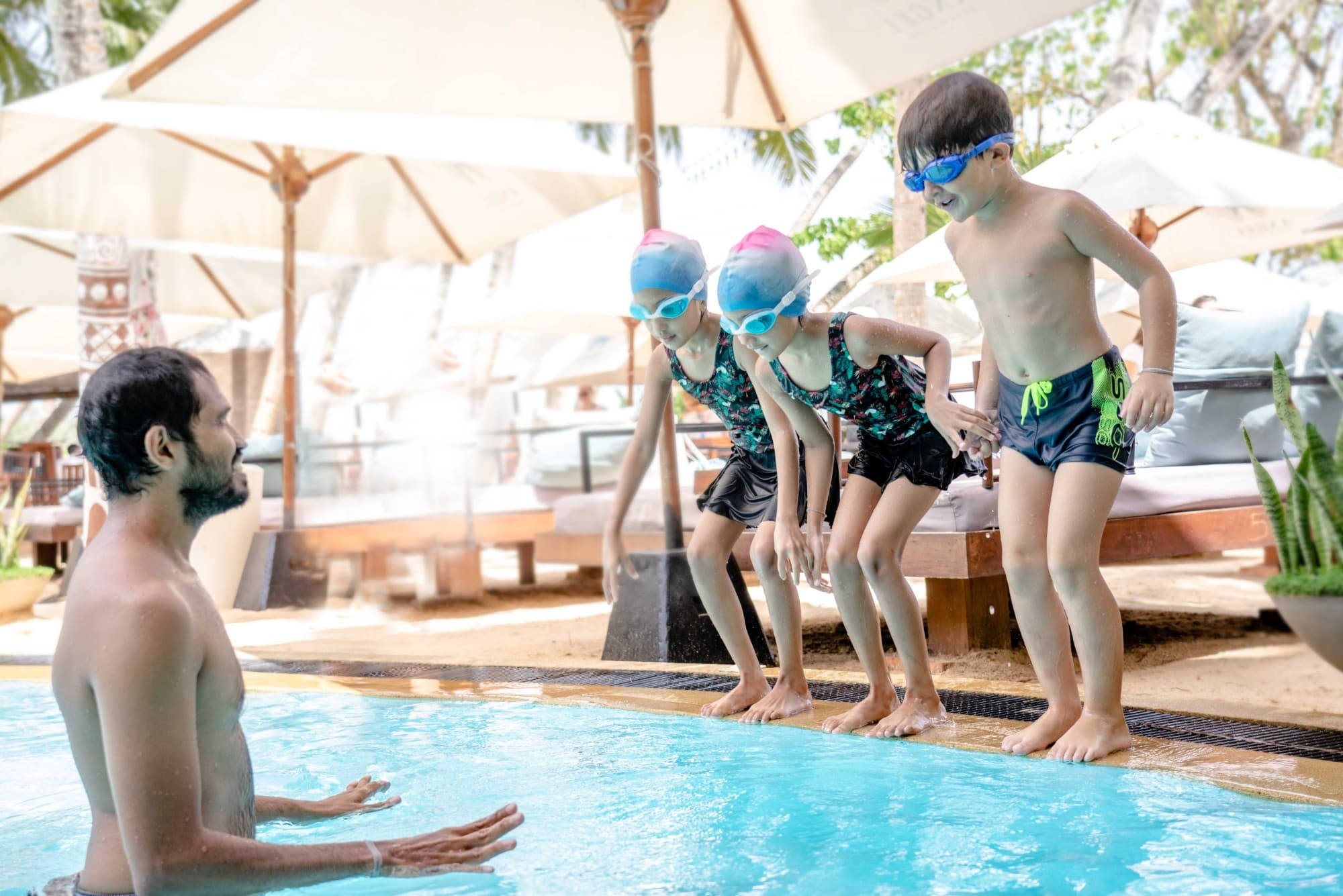
1. Who is actually teaching my child?
One of the first things parents should find out is who will be teaching their child.
Ask about the coach's qualifications and experience, particularly if your child is very young or nervous around water.
In Singapore, the National Registry of Coaches (NROC) exists to recognise qualified coaches and maintain professional standards. Sport Singapore states that NROC coaches are certified under the SG-Coach programme and must hold Standard First Aid certification, including CPR and AED.
For parents looking specifically for SwimSafer lessons, there are additional requirements. SwimSafer 2.0 instructors are required to have NROC membership, Safe Sport training, Standard First Aid + AED certification and SwimSafer instructor certification.
That does not mean qualifications are the only thing that matters.
A coach can have the right certificates and still need to be a good fit for your particular child.
A nervous four-year-old may need a very different teaching approach from an energetic eight-year-old who is already comfortable in the water.
So don't be afraid to ask:
"Have you taught children around my child's age and ability before?"
2. How many children will be in the class?
Class size can make a big difference to a child's experience.
A smaller class can mean more opportunities for individual attention, while a larger class may provide more opportunities for children to learn alongside their peers.
Neither automatically makes a lesson better.
What matters is whether the class size is appropriate for the children's abilities, the pool environment and the activities being conducted.
For example, Sport Singapore's SwimSafer guidance notes that although a 1:10 instructor-to-student ratio is stipulated for the programme, instructors should consider the characteristics of the students and reduce the class size or use a co-instructor where necessary.
This is particularly relevant for younger beginners.
A group of ten confident older children is very different from a group of ten preschoolers who are entering the water for the first time.
Parents should therefore ask:
"How many children will be in my child's class, and how is the class managed?"
3. What happens when the coach is teaching another child?
This is something parents may not think about.
During a swimming lesson, a coach cannot physically be beside every child at every moment.
So what happens when the coach is demonstrating a skill to another student?
Good supervision is not simply about counting children. It involves understanding where each child is, what they are doing, what their abilities are and where the coach needs to position themselves.
Official SwimSafer guidance specifically highlights the need for adequate supervision and asks instructors to consider class size and student characteristics when planning activities. It also emphasises that coaches should be familiar with the facility's emergency procedures and the location of rescue equipment, first-aid kits and AEDs.
As a parent, you can observe this for yourself.
During a trial lesson, look at where the coach stands.
Can the coach see the children who are waiting?
Are the children given clear instructions about what to do while waiting?
Does the coach know where each child is?
These small details can tell you a lot about how a lesson is organised.
4. Is the lesson appropriate for my child's actual ability?
A common mistake is choosing a class based only on age.
Two six-year-olds can have completely different swimming abilities.
One may already be comfortable swimming independently.
Another may still be learning to put their face underwater.
A good lesson should take the child's actual ability and confidence into account.
Singapore's national SwimSafer programme is designed around progressive stages, with swimming proficiency and water-survival skills developing progressively.
This is an important idea for parents too.
Your child's goal does not have to be:
"Learn freestyle as quickly as possible."
For a beginner, progress might initially look like:
- Entering the water willingly
- Putting their face underwater
- Blowing bubbles
- Floating with less assistance
- Moving away from the wall
- Learning to return to the side
- Becoming comfortable following instructions
These are all meaningful steps.
5. Does the coach teach water safety, or just swimming strokes?
Swimming lessons should be about more than learning freestyle, breaststroke or backstroke.
Children also need to understand how to behave around water.
Singapore's SwimSafer programme specifically combines swimming proficiency with water-survival skills and safety around aquatic environments. It has six progressive stages designed to develop confidence and independence in the water.
This is especially important for young children.
A child who can swim ten metres is not automatically prepared for every situation that could happen around a swimming pool.
They should gradually learn things such as:
- How to enter the water safely
- How to get out of the pool
- How to float
- How to regain control after losing balance
- How to move towards safety
- When they should not enter the water
- Why they should listen to adults around the pool
Swimming ability and water safety should develop together.
6. How does the coach handle a child who is afraid?
This question is particularly important for younger children.
Some children love the water immediately.
Others don't.
They may cry during the first lesson, refuse to put their face underwater or hold onto the pool wall whenever the coach lets go.
That does not necessarily mean they are "bad at swimming."
They may simply need more time.
A good coach should be able to explain how they work with nervous children rather than simply telling parents:
"Don't worry, they will get used to it."
Ask:
"What do you normally do if a child becomes scared during a lesson?"
The answer can tell you a lot about the coach's teaching philosophy.
7. Can I speak to the coach about my child's progress?
Finally, parents should feel comfortable asking questions.
You should be able to understand:
- What your child is currently working on
- What they are doing well
- What they are struggling with
- What the next step is
- What you can practise safely outside lessons
You don't need a long report after every class.
Even a simple update can help parents understand whether their child is progressing.
This is especially useful because swimming progress isn't always obvious.
A child who spent the first few lessons refusing to put their face underwater may have made a huge improvement even if they still cannot swim a full lap.
Swimming lessons are about more than learning to swim
The recent Singapore incident is a reminder that parents should not choose swimming lessons based only on price, location or how quickly a child is expected to progress.
At the same time, one reported incident should not make parents afraid of enrolling their children in swimming lessons altogether.
Swimming remains an important life skill.
Singapore's national SwimSafer programme itself is designed to develop both swimming proficiency and water-survival skills, with the broader aim of helping children become safer around aquatic environments.
The better approach is to ask questions, understand how lessons are conducted and choose a coach who is appropriate for your child's age, ability and confidence level.
And remember:
Learning to swim is not a race.
For one child, success might be swimming 25 metres.
For another, it might be confidently putting their face underwater for the first time.
Both are progress.
Looking for a swimming coach for your child?
Not sure what type of lesson or coach would suit your child?
Whether your child is a complete beginner, nervous around water or ready to improve their swimming skills, we can help connect you with a suitable swim coach.
Fill in the form and tell us a little about your child, your preferred location and your preferred lesson timing. We'll help connect you with a coach who may be a good fit.
Swimming lessons can build important skills and confidence, but children should always be supervised around water. Swimming ability does not replace appropriate adult supervision.