10 July 2026
Why Your Child Isn't Progressing in Swimming Lessons Yet (And Why That May Be Completely Normal)
By Marcus Tan, Senior Swim Coach · Last edited 10 July 2026
One of the most common questions parents ask after several weeks of swimming lessons is:
"Why doesn't my child seem to be improving?"
Maybe another child who started at the same time is already swimming independently. Maybe your child still hesitates before entering the water or struggles with skills that seem easy for others.
It is completely understandable for parents to feel concerned.
After all, swimming lessons require time, commitment, and financial investment. Naturally, parents want to see progress and feel confident that their child is moving in the right direction.
But here is something many parents do not realise:
Swimming progress rarely happens in a straight line.
Children learn at different speeds, develop different strengths, and respond to water differently. What looks like slow progress from the outside is often part of a very normal learning process.
Before assuming your child is falling behind, it helps to understand how children actually learn.
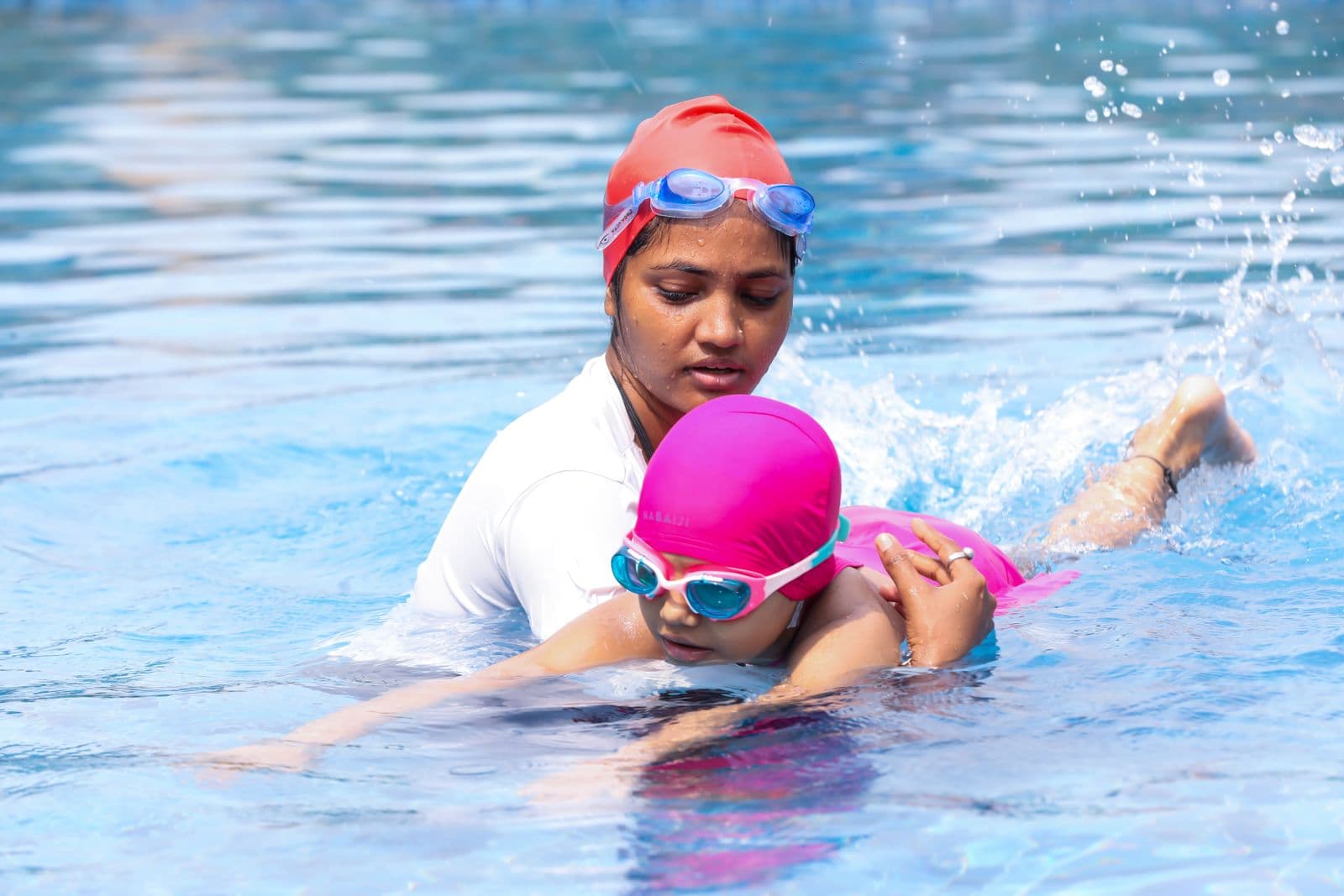
Why swimming progress is not always linear
Many parents imagine progress looking something like this:
- Week 1: Child enters the pool
- Week 2: Child learns kicking
- Week 3: Child floats independently
- Week 4: Child swims confidently
In reality, it often looks more like this:
- Week 1: Excited and willing
- Week 2: Nervous about floating
- Week 3: Comfortable again
- Week 4: Refuses to put face underwater
- Week 5: Suddenly becomes more confident
- Week 6: Makes a major breakthrough
Children often move forward, pause, and sometimes even move backwards temporarily before progressing again.
This does not necessarily mean something is wrong.
Learning water skills involves more than physical movement. Children are also learning:
- Trust
- Body awareness
- Breathing control
- Confidence
- Coordination
- Emotional comfort
All of these develop at different speeds.
Five reasons children learn swimming differently
1. Fear and confidence levels develop differently
Some children jump into new experiences immediately.
Others prefer observing first before trying.
Neither approach is wrong.
Children who take longer to trust the environment may initially appear slower, but once they feel comfortable, progress often accelerates quickly.
Parents sometimes focus only on visible skills and miss emotional development happening underneath.
2. Motor skills develop at different ages
Swimming combines many different movements:
- Kicking
- Arm coordination
- Balance
- Timing
- Breathing
- Body positioning
Some children naturally develop coordination earlier than others.
A child struggling with one movement today may suddenly improve significantly after a few weeks or months.
Physical development plays a larger role than many parents realise.
3. Personality affects learning style
Children approach learning differently.
Some children:
- Love trying new things
- Enjoy taking risks
- Learn through experimentation
Others:
- Prefer predictability
- Need repetition
- Observe before participating
A cautious child is not necessarily a weaker swimmer.
They may simply process new experiences differently.
4. Inconsistent practice affects progress
Swimming is a skill that improves through repetition.
Long gaps between lessons can sometimes slow momentum.
For example:
- School examinations
- Holidays
- Busy schedules
- Illness
- Family commitments
Even confident swimmers sometimes need time to readjust after breaks.
Temporary slowdowns are common.
5. Some children are building invisible foundations first
Parents often notice visible achievements:
- Swimming further
- Floating independently
- Moving faster
Coaches sometimes notice less visible improvements happening behind the scenes:
- Relaxing shoulders
- Better breathing patterns
- Reduced hesitation
- Improved listening
- Greater trust in water
These small changes may not look impressive immediately, but they often create bigger progress later.
Progress parents often miss
Sometimes parents expect major breakthroughs and overlook smaller victories.
Examples of progress may include:
- Week 1 — Entering the pool with hesitation
- Week 3 — Entering the pool willingly
- Week 5 — Blowing bubbles comfortably
- Week 6 — Floating briefly
- Week 8 — Swimming short distances
- Week 10 — Becoming more independent
Progress does not always look dramatic.
Sometimes confidence develops quietly.
What parents should avoid doing
When parents become worried, certain reactions can unintentionally create more pressure.
Comparing children
It is natural to notice other children progressing differently.
But comparisons can create stress and reduce confidence.
Every child brings different strengths and challenges.
Asking only about achievements
Parents sometimes ask questions like:
"What did you learn today?"
or
"Can you swim already?"
Children may begin feeling that every lesson needs a visible result.
Try asking:
"What was your favourite part today?"
or
"What did you enjoy?"
This shifts attention toward positive experiences rather than performance alone.
Expecting progress every lesson
Some lessons focus heavily on comfort, trust, or repetition.
Parents may not always see immediate changes.
Learning often happens beneath the surface before becoming visible.
How swim coaches monitor progress
Coaches usually assess more than obvious swimming skills.
They may look at:
- Comfort levels
- Breathing patterns
- Body positioning
- Attention span
- Confidence consistency
- Emotional responses
Strong foundations usually matter more than rushing to achieve the next visible milestone.
Final thoughts
Slow progress does not automatically mean poor progress.
Many children who appear to struggle early eventually become confident swimmers.
Some simply need more time to develop comfort, coordination, or trust.
Swimming is not only about learning strokes.
It is also about helping children build confidence and feel safe in the water.
If you are wondering whether your child's progress is normal or would like guidance on what to expect next, fill in the form and we can connect you with a suitable swimming coach who can assess your child's current stage and guide them forward.